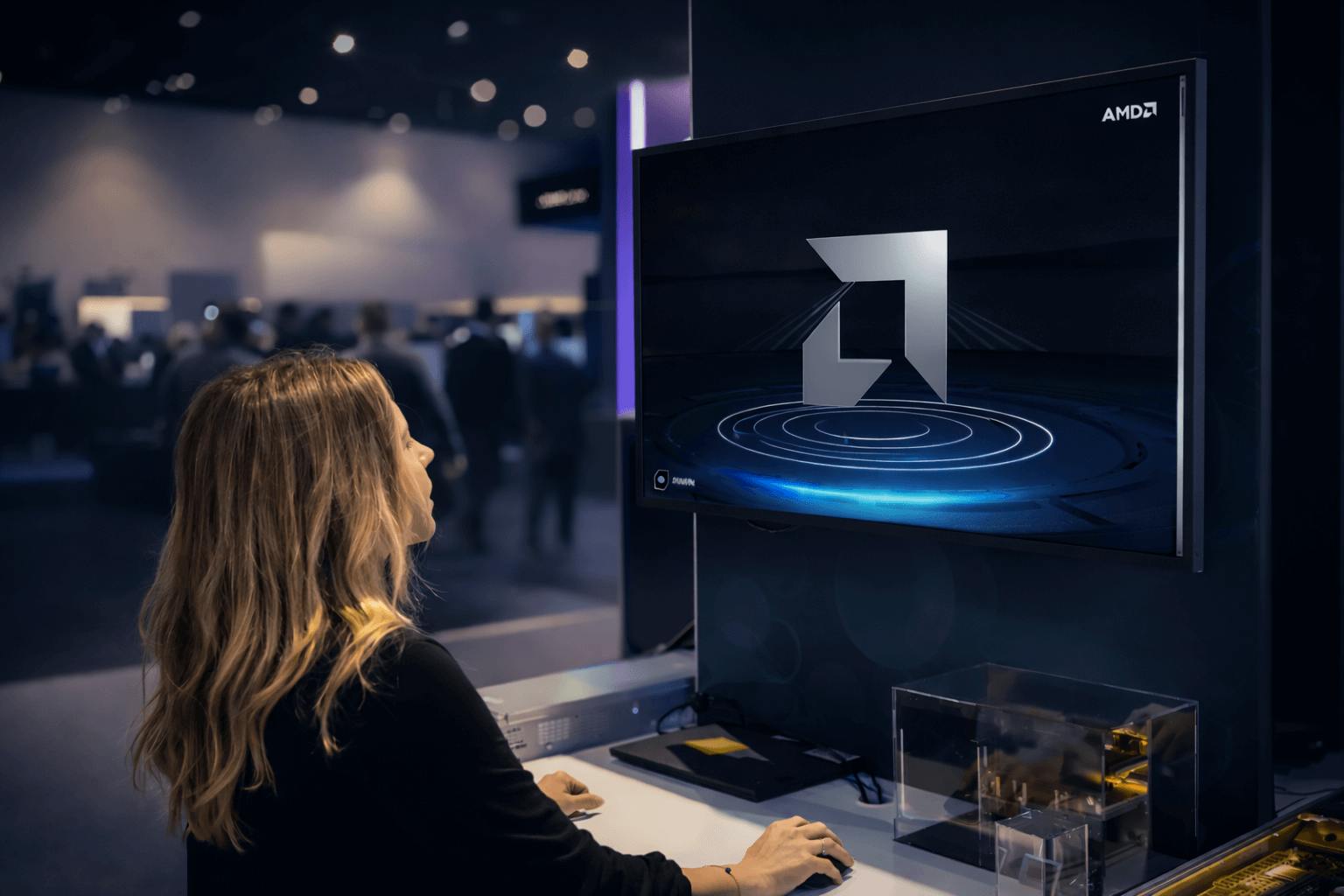




We've spent years building digital storytelling experiences for brands like Salesforce, AMD, Red Bull and Coinbase. Interactive websites. Immersive web platforms. Conference activations.
The core challenge is always the same: how do you make complex systems feel simple and compelling?
Now we're bringing that same approach to video.
Not motion graphics. Not product demos. Video storytelling. Where the goal isn't just to show your product but to make people understand it, feel something about it, and remember it.
Same design process. Same level of craft. Same workshops and brainstorms. The only difference is the delivery: a video instead of a website.
Here's how we approach it, and what that looks like in practice.
 Story-driven 3D animation for enterprise brands demonstrating narrative-first approach, cinematic direction, and visual metaphor application for product storytelling
It starts with story, not specs
When most companies come to us for a product video, they start with features.
"We need to show the dashboard."
"Can you animate the data flow?"
"We want to highlight these three capabilities."
That's not where we start.
We start with questions:
What problem does your product actually solve?
Who's the person experiencing this problem?
What does their world look like before and after your solution?
What's the emotional shift we're trying to create?
These aren't just nice-to-haves. They're the foundation of storytelling.
Because here's the thing: nobody remembers feature lists. They remember stories. They remember how something made them feel. They remember the moment they understood why it matters.
That's what we're designing for.
The storytelling process: from workshops to final frames
Our video projects follow the same process we use for interactive websites and immersive experiences.
Week 1-2: Discovery and story definition
We run workshops with your team. Product, marketing, sometimes sales and leadership.
The goal isn't to gather requirements. It's to uncover the story.
What we're figuring out:
- What's the core narrative? (Not features but the actual story)
- Who's the audience? (Not "enterprises," but "CTOs evaluating vendor platforms")
- What's the emotional journey? (Confusion → clarity, skepticism → trust, overwhelmed → empowered)
- What's the one thing viewers need to remember?
We map this visually. Narrative arcs, emotional beats, key moments. This becomes the blueprint for everything that follows.
Week 3-4: Visual direction and storyboarding
Once the story is locked, we translate it into visual language.
Key decisions:
- What's the visual metaphor? (Data as flowing particles, security as a fortress, collaboration as interconnected nodes)
- What's the pacing? (Fast-cut energy vs slow, confident reveals)
- What's the tone? (Premium and polished, raw and authentic, playful and approachable)
- How does it connect to your brand? (Not just logo placement but actual visual DNA)
We create style frames and motion tests, just enough to align on direction before we commit to production.
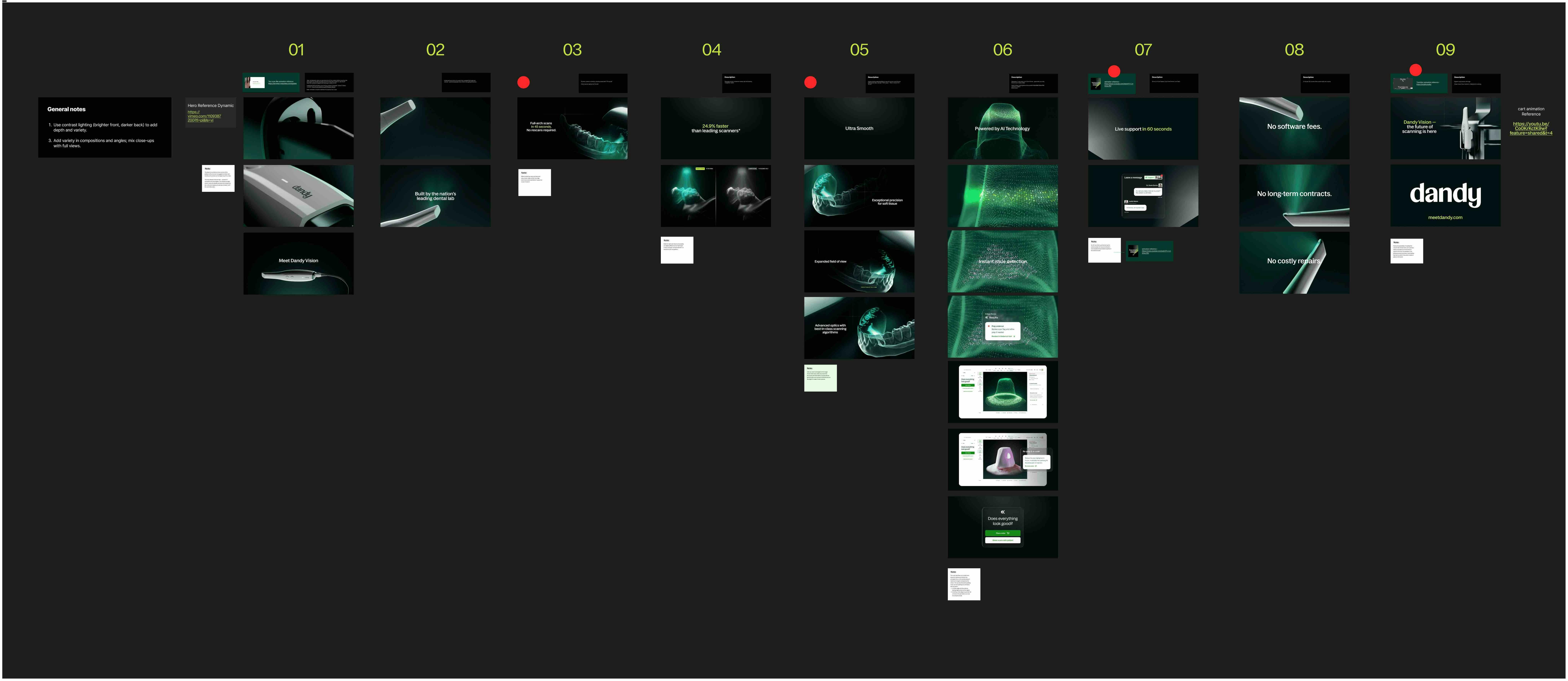 Initial storyboard for video storytelling showing narrative beats, emotional arcs, key moments, and pacing sequences for product story structure
Week 5-6: Production and refinement
This is where the 3D work happens.
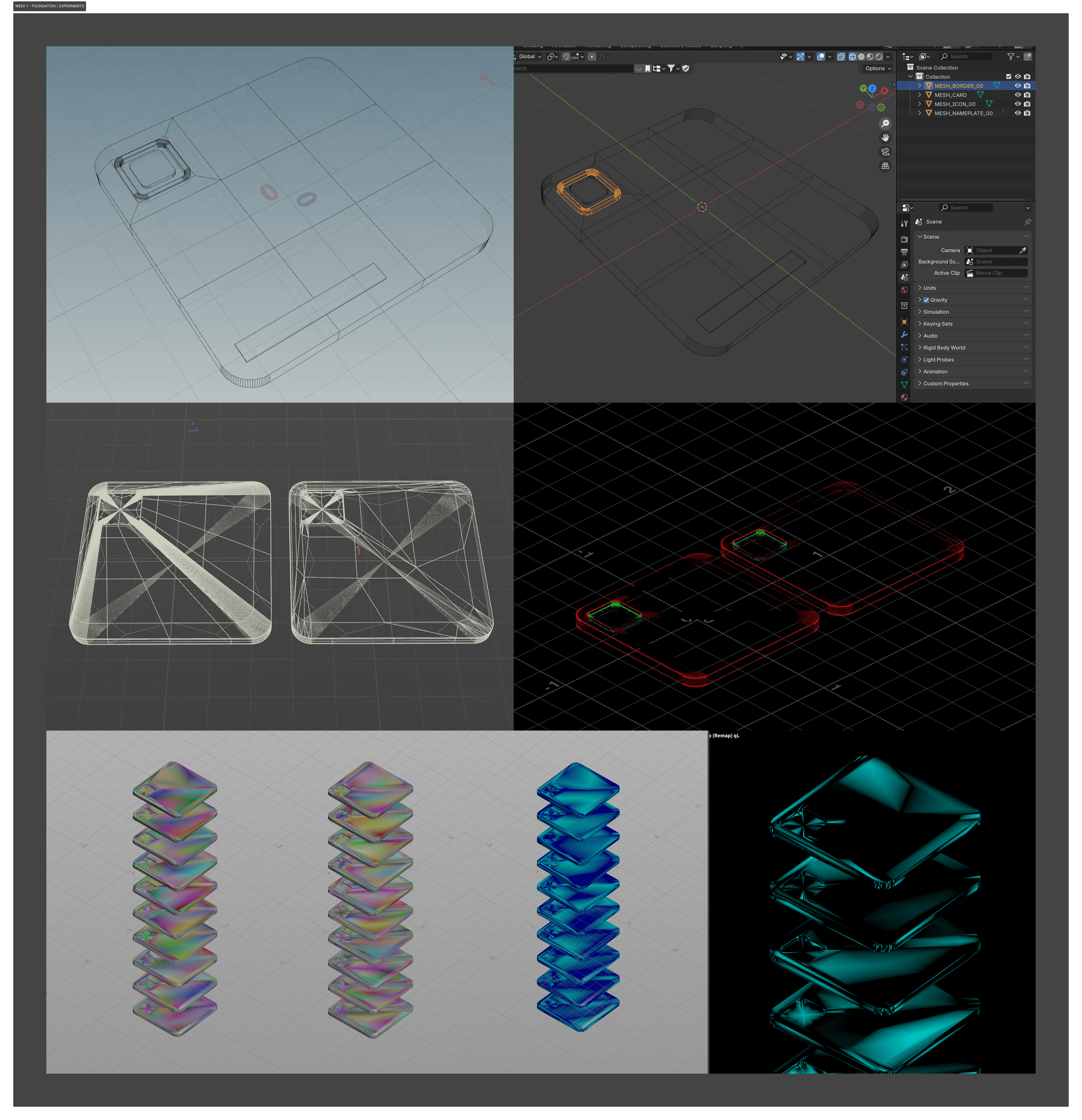 3D modeling experiments showing iteration cycles of asset creation, material testing, animation exploration, and refinement based on narrative requirements
Modeling, texturing, lighting, animation, rendering. But also constant iteration based on the story. Does this shot land emotionally? Does this transition support the narrative flow? Is the pacing right?
We're not just making things move beautifully. We're making sure every frame serves the story.
Case study: AMD Solare
The challenge: Present AMD's Solare chip technology in a way that communicates both technical innovation and strategic vision.
The problem with typical approaches: Chip presentations often get lost in technical specifications without helping audiences understand the broader impact and innovation behind the technology.
Our approach: Create a visual narrative that brings the Solare chip story to life through thoughtful 3D visualization and strategic pacing.
We developed a presentation that balances technical depth with visual clarity. The camera movements guide viewers through the chip's key innovations, making complex semiconductor technology accessible without oversimplifying it.
The storytelling decision: Rather than overwhelming with specs, we revealed the technology progressively by building understanding layer by layer, letting each innovation land before introducing the next.
Visual metaphor: Precision engineering meets future-forward innovation. Clean aesthetics, purposeful reveals, confident presentation flow.
Result: A presentation that engages technical audiences while maintaining clarity and visual impact throughout.
Read the full AMD case study →
Case study: Dandy Vision
The challenge: Launch a dental imaging platform that combines AI, 3D scanning, and clinical workflow in one story.
The storytelling angle: Follow the patient journey. Show the problem (traditional imaging limitations), the solution (Dandy's technology), and the outcome (better care, better efficiency).
Visual approach: Clean, medical-grade aesthetic. We avoided the typical "tech demo" feel. Instead, we focused on clarity and trust which was critical for healthcare technology.
Key narrative moments:
- Opening: The current state of dental imaging (the problem)
- Middle: How Dandy's technology changes the workflow (the solution)
- Close: The impact on patient care (the outcome)
Why it works: The video doesn't feel like a product pitch. It feels like an explanation from someone who understands your world.
Case study: Vibrant Wellness
The challenge: Explain a complex health testing platform in a way that feels approachable, not clinical.
The narrative: Health data is overwhelming. What if it could actually make sense?
Visual language: We used flowing, organic forms instead of rigid UI screenshots. Data visualization that feels alive, not sterile. Color and motion that conveys wellness, not just technology.
The context: These videos were part of a larger interactive digital experience we created for a Vibrant Wellness event. The experience began with a stylized 3D human body as the entry point. From there, attendees navigated into different body systems—gut, hormone, cardio, oxidative stress, toxin, and neural pathways. Each system featured interactive hotspots and visual cues where users could discover key lab tests like the Gut Zoomer. The videos lived at the deepest layer of this experience, providing detailed explanations of physiological processes and markers when attendees wanted to dive deeper into specific tests.
The emotional shift: From confused and disconnected → clear and confident.
Read more about the Vibrant Wellness experience →
Case study: Percipio Health
The challenge: Introduce a device-free population health monitoring platform to healthcare providers and payers.
The storytelling approach: Remote patient monitoring has traditionally been costly and device-dependent. The video needed to show how Percipio's smartphone-based approach changes the economics and scalability of population health.
Visual direction: Clean, accessible aesthetics that balance clinical credibility with approachability. We avoided heavy medical imagery, instead focusing on the human side of health monitoring—showing how technology enables better care without adding complexity.
Narrative structure:
- The limitations of traditional device-based remote patient monitoring
- How Percipio's smartphone app reaches broader populations at lower cost
- The impact on both rising-risk and high-risk patients
The context: These videos were created as part of the website we built for Percipio Health and designed for multiple uses—embedded in the site, used in presentations to healthcare organizations, and shared across marketing channels.
Why this matters: In healthcare technology, demonstrating scalability and cost-effectiveness requires showing the solution in action, not just explaining features. The video makes the value proposition tangible.
Read the Percipio Health story →
What makes video storytelling different from "product videos"
Most product videos follow a template.
Logo. Tagline. Feature 1. Feature 2. Feature 3. CTA. Done.
That's not storytelling. That's a checklist.
Here's what we do differently:
We make complex systems simple
Enterprise products are complicated. That's fine since they solve complicated problems.
But your video doesn't need to be complicated.
We find the visual metaphor that makes your system intuitive. Data flowing like water. Security layers like a fortress. Collaboration like interconnected nodes.
The right metaphor makes people go, "Oh, I get it."
We visualize data in ways that feel natural
Data visualization in video often fails because it's either too abstract (meaningless shapes) or too literal (boring bar charts).
We treat data like a character in the story. It has movement, purpose, behavior. It responds to actions. It tells you something through how it moves, not just what numbers it shows.
We connect the technology to the people
Every product exists to serve someone. A doctor. A CTO. A team. A customer.
We make sure the video shows that connection. Not through stock footage of people nodding at screens but through the actual story of how the product changes someone's experience.
We design for the medium
Video isn't just "a website that moves."
Different pacing. Different information density. Different emotional rhythm. Different viewing context (presentation deck, website embed, social media).
We design specifically for how the video will be used and who will watch it.
When video storytelling makes sense
Video storytelling works best when:
You're launching something new
People need to understand what it is and why it matters. A story beats a spec sheet every time.
You're explaining something complex
If your product requires a 30-minute demo to understand, a well-crafted 2-minute story can get people 80% of the way there.
You need to create emotional connection
Facts inform. Stories persuade. If you're trying to shift perception or build trust, storytelling is the tool.
You're presenting to decision-makers
Executives don't have time for feature tours. They need to understand the vision, the value, and the impact in a matter of seconds.
You're differentiating in a crowded market
When every competitor has similar features, story becomes your differentiator.
When to choose web experience vs video
We build both interactive web experiences and video storytelling. Here's how to think about which makes sense:
Choose video when:
- You need portability (presentations, social media, email campaigns)
- You want controlled pacing (you guide the narrative exactly)
- You're targeting passive consumption (people watching, not clicking)
- You need something that works everywhere (no browser compatibility issues)
Choose interactive web experience when:
- You want users to explore at their own pace
- The story has multiple paths or configurations
- Interactivity is part of the message (showing control, customization, flexibility)
- You want to capture engagement data
Use both when:
- You're doing a major launch and need assets for multiple channels
- The product is complex enough to warrant deep exploration and quick overview
- You want video for awareness, web experience for conversion
We often recommend starting with video for product launches. It gives you a versatile asset you can use everywhere. Then layer in interactive experiences as the campaign matures.
What to expect
Typical project scope:
- Duration: 6 weeks (can vary based on complexity and length)
- Deliverables: Final video in multiple formats, styleframes, project files
What influences cost:
- Video length (60 seconds vs 3 minutes makes a big difference)
- Visual complexity (simple geometric forms vs detailed environments)
- Number of concepts (one clear narrative vs multiple story directions)
- Revision rounds (most projects include 2-3 rounds built in)
- Rush timeline (standard is 6 weeks; faster requires additional resources)
What's included:
- Discovery workshops with your team
- Story development and narrative arc
- Styleframes and visual direction
- Storyboarding and animatics
- 3D modeling, animation, and rendering
- Sound design and music (if needed)
- Revisions and refinement
- Final delivery in formats for web, presentations, and social
Our storytelling principles
These are the beliefs that guide every video we create:
Story first, always
Technology is the tool. Story is the goal.
We never start with "what looks cool" or "what's technically impressive." We start with what serves the narrative.
Clarity over cleverness
A metaphor only works if people get it.
We're not trying to win awards for abstract creativity. We're trying to make your story clear, compelling, and memorable.
Emotion drives memory
People forget features. They remember how something made them feel.
Every video should have an emotional arc, even if it's subtle. Confusion → clarity. Skepticism → trust. Overwhelmed → confident.
Show, don't tell
Instead of a voiceover saying "our platform is fast," show data moving instantly through the system.
Instead of claiming "we simplify complexity," show the messy before-state transforming into elegant clarity.
Visual storytelling means showing the truth, not claiming it.
What clients often don't expect
It's not about the video. It's about the story.
Most companies come to us thinking they need "a video." What they actually need is a story. The video is just the medium.
This is why we spend so much time in discovery and workshops. We're not gathering requirements for animation. We're uncovering the narrative that will make your product memorable.
The best ideas come from collaboration
We don't disappear for 6 weeks and deliver a finished video.
The best storytelling happens when we're working with your team, not just for you. Your product expertise + our storytelling craft = something better than either of us could create alone.
Story definition takes time, and it's worth it
Weeks 1-2 might feel slow. We're asking questions, running workshops, debating narrative approaches.
This is the most important phase. Once the story is right, everything else flows naturally. Rush this, and you'll spend weeks 5-6 trying to fix something that was broken from the start.
The right video works for years
A well-crafted story doesn't age as fast as a feature demo.
The AMD, Dandy, and Vibrant Wellness videos we created are still being used months later because they tell stories, not just showcase current UI. As products evolve, the story still holds.
The difference between good and great
Anyone can make a 3D product video.
The technical bar is lower than ever. Talented animators. Affordable tools. Plenty of motion graphics studios.
What separates good from great isn't the rendering quality or the particle effects.
It's whether someone watching actually cares.
A good video shows what your product does.
A great video makes people understand why it matters.
A good video lists features.
A great video creates an emotional shift.
A good video gets viewed.
A great video gets remembered and shared.
That shift from good to great happens in the story. Not the specs. Not the effects. The story.
And story is what we do.
Frequently asked questions
How long does a typical video project take?
6 weeks is our standard timeline for a well-crafted product story. Simpler projects can be faster; more complex narratives or longer videos may take 8-10 weeks.
Can you work with existing brand guidelines?
Absolutely. We design within your brand system while bringing storytelling and motion expertise. The video should feel like a natural extension of your brand.
Do you handle voiceover and sound design?
Yes. We can source voiceover talent, write scripts, and handle full sound design and music. Or we can work with your preferred partners.
What if our product changes during production?
Minor updates are normal and we build flexibility into the process. Major pivots might require timeline or scope adjustments. This is why we lock the story early since it creates stability even if product details shift.
Can you create multiple versions for different audiences?
Yes. Once the core story is built, creating variations (shorter cuts, different messaging, audience-specific versions) is relatively efficient.
How do video projects compare to your web experience work?
Same process, same craft, different medium. The discovery, workshops, and story-first approach are identical. The output is video instead of an interactive website.
Do you only work with enterprise companies?
We work with established startups and enterprise companies who value storytelling and have the budget to do it right. If you're earlier stage but have a compelling story and the investment, let's talk.
Let's tell your story
We've spent years helping companies like Salesforce, AMD, Red bull, Coinbase tell their stories through interactive experiences and immersive web design.
Now we're bringing that same storytelling approach to video.
If you're launching a product, explaining a complex system, or trying to create real connection with your audience, let's talk.
Not about features. Not about specs.
About the story.
Want to discuss a video project? Connect with us to talk about your story, timeline, and goals.
Related work and insights
Video storytelling projects:
- Dandy Vision - Dental imaging platform launch
- AMD Solare - Chip technology presentation
- Vibrant Wellness - Health platform narrative
- Percipio Health - Mental health technology story
Our storytelling approach:
- The power of digital storytelling - Our philosophy on narrative-driven design
- Best storytelling websites - Examples and principles
- 3D and immersive experiences - Technical capabilities
Written by the Noomo team
Design and creative technology studio specializing in storytelling through interactive experiences, 3D video production, and immersive brand narratives for enterprise technology, healthcare, and product companies including Salesforce, AMD, Coinbase, and emerging category leaders.